Friday, 27 January 2012

Leaving Politics Aside, Scotland Deserves Freedom

In an about turn contemplated over several years, our UK Political Editor Harry Cole sets out why he now supports the notion of an independent Scotland


Ae fond kiss, and then we sever! Ae farewell, and then forever!

Written by Harry Coleon 25 January 2012 at 4pm


Sponsored Message: With characteristic bluster the First Minister chose Burns Night to set out his plans for the promised referendum on Scottish independence. As Salmond said this afternoon, independence would give “a fundamentally better relationship across these islands, and a more balanced one than we have today.” I agree with Alex.

Anyone who ever had the dubious pleasure of hearing me hone my public speaking skills in the debating chambers and drunken dinner parties at Edinburgh University will wonder where my body has been buried by the end of this piece. We will hear the defence of the union between England and Scotland countless times over the next few years, and it’s an argument that five years ago I could give you standing on my head. However, I just don’t believe it anymore.

Having lived in Edinburgh for four years, since returning south my unionist credentials have weakened by the day. It’s not just the much trodden notion that, in political terms, the right would be the biggest victors of a split. That idea doesn’t hold much water anyway. The issue of Scottish freedom goes beyond party politics, though there are plenty of reasons why politicos of all colours should not be scared of the consequences.

Scotland is not well. This is the nation that gave us the telephone, the television, reason, logic, economics and whisky. Yet since the business interests of some three hundred Edinburgh merchants over-ruled the desires of the rest of a nation in 1707, Scotland has been in decline. The brain drain that saw enlightened Scots give America its magnificent constitution has never stopped.

What remains is a nation dependent on the state; a hand out culture and a something for nothing utopia. An insult to its past. And this will never change while Scotland remains the junior partner in a relationship it never asked to be in. According to the 1909 census, Scots were the tallest people in Europe, yet they now have a life expectancy four years lower than the European average. With two thirds of the country living off, or employed directly by, the state, it is clear that dependency is not working.

As is so often the case, the solution to this problem is freedom. Scotland will not recover while dependent on London. This conversion to the cause is not to say I will suddenly be supporting the SNP. Their machine is smothering Scottish freedoms through their continuous feeding of the state machine.

With Devolution Max, the obvious halfway house to full independence, Scotland would be raising its own taxes and will be forced to realise that free prescriptions and free education for life are the perks of a society free of responsibility. Salmond is not the man to lead a free country and his ideas on how to get there are deeply flawed. However, that is not to say he is wrong on the core issue that drives his fight.

The SNP are not yet signed up to the reality based community and they seem to be doing everything to avoid having to tell the Scottish people how it really is.

With Devo-Max, Scotland will take its share of the debt and for the first time their fair share of the pain. With economic stagnation on either side of the border, both Scotland and England need a rival. With independence or Devo-Max these two nations can rival each other.

This mire that blights us both could be solved through two economies competing for trade; two economies forced to reduce tax to attract investment; Edinburgh’s financial West-End slashing rates to challenge the City. The two nations cannot properly compete while one is latched onto the Westminster teat. Two neighbouring nations must become friendly rivals.

And what of the other half of this once convenient marriage? There are those on the English right who support Scottish freedom because of the lazy idea that it would lead to a permanent Conservative majority in the UK. In 2005 there were nearly one hundred thousand more Conservative voters in England, and by May 2010 that figure was closer to million.

As for English Labour, they would learn to adapt to survive. It would probably require a shift further right for Labour in order to win, but that is natural given that they will no longer have the support of their guaranteed Scottish returns. It does not take much to envisage a Labour leader who can eat into the small-c conservative majority that makes up England. Hell, it wasn't too long ago they were winning election after election on those terms.

And all would not be lost for liberals and self-proclaimed progressives either. If Scotland were to separate it would come in stages, with Devo-max the obvious halfway house. Such a break would leave Westminster to debate and decide foreign policy and defence, but England would have to have a separate legislature for its own affairs.

In all likelihood, and rightly so, this new English parliament will be elected by some sort of proportional system. Our First Past the Post system luckily evolved into something better in reality than it looks on paper, but in all honesty even its most vocal supporters could not say that a brand a new system should be built by the same design. The potential for a real role for a fully elected House of Lords would be forced into play by a split, too.

The matter of Scottish independence goes beyond party politics. All sides of the political debate have something to lose from the split, but that is far outweighed by what the two separate countries will gain. Economic revival, cultural rejuvenation and a more a democratic country should be the dream of all parties and Devo-max can provide that. It is a step that makes sense for the futures of both England and Scotland.

The Act of Union served those who wanted it well, but the majority were never asked. The time has come to rectify that, and to take a leaf from Salmond’s book, I’ll let Burns have the last word:

“Ae fond kiss, and then we sever!

Ae farewell, and then forever! “

Harry Cole is the UK Political Editor for The Commentator and the News Editor for the Guido Fawkes Blog. He tweets at @MrHarryCole

Tags: Alex Salmond, Alex Salmond Burns Night, An independent Scotland good for friendly competition with England, Devolution Max, Edinburgh, Harry Cole and Scottish independence, Scottish independence, Should Scotland break away from the Union?, Where would an independent Scotland leave Labour?, Why Scotland must become independent, Will an independent Scotland benefit the Conservative Party?, devolution, harry cole

Hamish MacDonnell - This New Scotland is Slick and Professional

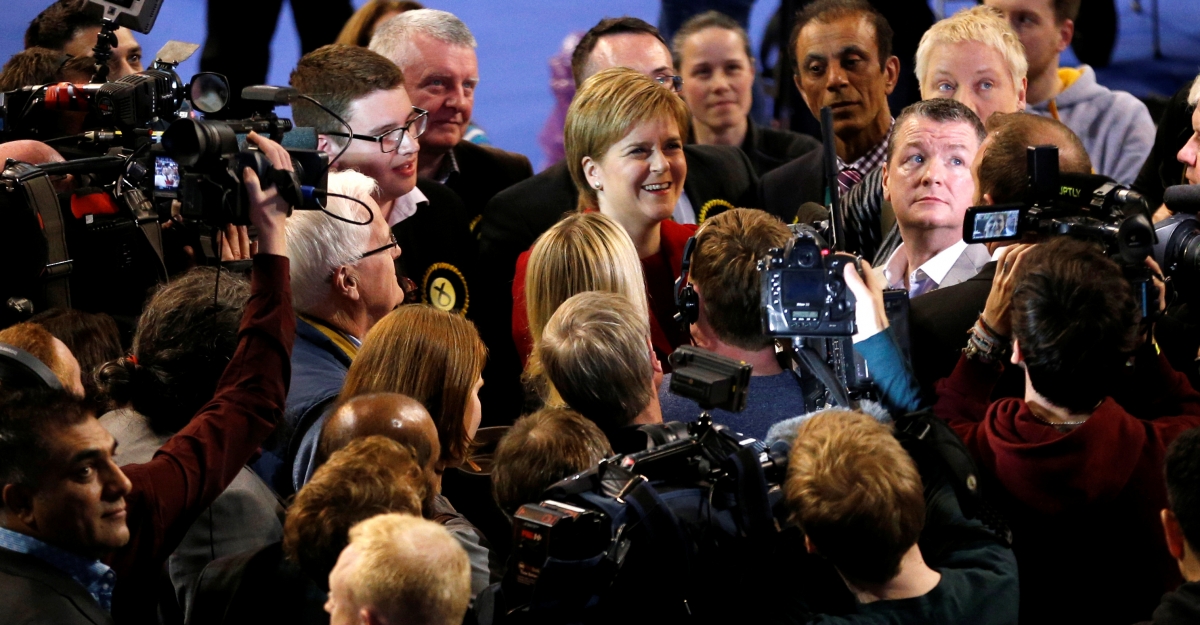
It was no coincidence: Alex Salmond chose the Great Hall of Edinburgh Castle and Burns’ Night to launch his consultation on an independence referendum yesterday so he could send out the message that this was about Scotland and nothing else.


From the high, wood-beamed ceiling and the suits of armour in this most impressive of ancient Scottish halls to the lines of verse from Scotland’s national bard which the Scottish First Minister dripped into his speech, everything was designed to impress – and not just the Scots.

There were reporters from China, broadcasters from Spain and bloggers from Russia packed into the hall – all there to find out whether the United Kingdom was about to be broken up.

And because he knew his message would go world-wide, Mr Salmond was most careful too in the impression he gave about his vision for Scotland.

“This is a most prosperous country,” he declared – without pausing to let anybody query that statement.

He quoted Rabbie Burns, he spoke of the history of the Great Hall – the venue for the first recorded meeting of the Scots Parliament 900 years ago - and he spoke of his vision for the future of Scotland as a free, independent, progressive European nation state.

Soon after he started, though, the wind got up – as it tends to do around this rocky outcrop perched high above Scotland’s capital.

The gale started rattling the stained-glass windows and blowing around the grand fireplace behind the First Minister’s back.

“Ah, the winds of change,” Mr Salmond quipped.

In doing so, he both echoed Harold Macmillan’s famous speech of 1960 which heralded the break-up of British colonial Africa but he also showed he is as diligent a student of politics as any leader in these islands.

Apart from his entrance, which was a characteristic 45 minutes late, everything about Mr Salmond’s presentation oozed professionalism.

Every detail seemed to have been considered. The First Minister usually speaks from a lecturn embossed with the website address of the Scottish Government.

Not yesterday. For this big event, even the lecturn had been changed and now bore the web address of the referendum consultation paper – just in case it was picked up by the television cameras.

There was a modern new Saltire logo and everything was branded with the slogan: “Your Scotland, Your Referendum.”

It was slick and professional and it is this, above all, that should worry the UK Government. There may be considerable gaps in the detail of the SNP’s plans for independence but, on the surface at least, they appear unbeatable.

Plaid Leadership Contest

Simon Thomas, Elin Jones, Leanne Wood & Dafydd Elis-Thomas

Cyhoeddi ymgeiswyr Arweiniaeth 2012


Annwyl Gyfaill

Rydw i’n falch iawn i gyhoeddi bod pedwar ymgeisydd yn cystadlu ar gyfer arweinyddiaeth y Blaid. Pedwar ymgeisydd cryf iawn sydd yn awyddus i arwain ein plaid – Dafydd Elis-Thomas, Elin Jones, Simon Thomas a Leanne Wood.

I’m delighted to announce that four candidates will contest the party’s leadership. Dafydd Elis-Thomas, Elin Jones, Simon Thomas and Leanne Wood are all extremely strong candidates to lead our party.

There’s been huge interest in this contest so far. The fact that so many members have chosen to be part of the process to elect a leader and move Plaid and Wales forward bodes well for our party in the future.

We’ve seen a surge in new members in recent months, all ready to play a part in making sure Wales moves forward and reaches its potential.

A series of hustings meetings will take place during February throughout Wales to give our thousands of members an opportunity to meet and put questions to all four candidates.

Whoever Plaid decides to choose as leader, we know that Plaid Cymru has the talent which is capable of inspiring and reaching out to everyone in all parts of Wales and delivering on their ambitions.

For Wales

Rhuanedd Richards

Plaid Cymru Chief Executive

Wednesday, 25 January 2012

Burns´ Night

.

..Scottish leader turns to poet for referendum backing

By Mohammed Abbas
Reuters – 20 minutes ago....

Scotland's First Minister Alex Salmond launches the Scottish government's consultation paper on an indedependence referendum, in the debating chamber of the Scottish Parliament in Edinburgh, Scotland January 25, 2012. REUTERS/David Moir


....EDINBURGH (Reuters) - Scotland's nationalist leader Alex Salmond marked Burns Night on Wednesday, when Scots toast their national poet, by unveiling his plans for an independence referendum in defiance of British government proposals.


Salmond compared Scotland's path to independence to Robert Burns' transformation in the 18th century from a simple ploughman to a literary legend as he set out plans for a vote in late 2014 on ending Scotland's 300-year union with England.


"The people who live in Scotland are the best people to make decisions about their own future. Of that there can be no doubt," Salmond told the devolved Scottish parliament.


"The question we intend to put to the Scottish people in the referendum .... is 'Do you agree that Scotland should be an independent country?'" the First Minister said, drawing applause from supporters in parliament where his Scottish National Party (SNP) has a majority.


Recent polls indicate only around 30 to 40 percent of the Scottish electorate support Scotland breaking away from Britain.


Others seem happy to support the SNP to lead a devolved government which can wring a good deal out of authorities in London, but do not want to break away from Britain.


Independence for Scotland would have profound economic and political consequences for Britain and its political path is being followed closely by others in Europe, including in Spain where some regions have long eyed independence.


At least seven Spanish news outlets were in Edinburgh to cover Salmond's address. After addressing parliament he was taken to brief international journalists at Edinburgh castle, backdrop to centuries of conflict between the English and Scots.


SPIRIT OF BANNOCKBURN


The government in London, which opposes independence, insists only it can grant Salmond the power to hold a legally binding vote. It wants to force an early poll before Salmond can build support for a breakaway.


The SNP leader wants to hold the referendum in autumn 2014 when he would be able to ride a wave of nationalist sentiment on the 700th anniversary of the Battle of Bannockburn, an historic victory over the English.


The SNP leader would also benefit from the feel-good factor of Scotland hosting the Commonwealth Games and Ryder Cup sporting events that year. Scotland's population of around 5.2 million makes up a small percentage of Britain's 62.3 million.


Salmond quoted the Burns' poem A Man's A Man For A' That, which contains lines mocking privileged lords, to back his case.


"I'm told there are members of the House of Lords (the upper house of the London parliament) who believe that it is in their province to set boundaries on what Scotland can and cannot do.


"Perhaps they should be reminded that Burns' great hymn to equality has been heard in this Parliament before," he said.


The government also insists on a say in how the referendum is run, including the crucial issue of the type and number of questions asked. #


It prefers a simple "yes/no" ballot while Salmond said he also wanted a third option, known as "devo max," which would devolve to Scotland further powers from the British parliament in Westminster without outright independence.


London says a referendum including that question would be rigged in the SNP's favour because a three-way split in the ballot could give the separatists a win with fewer votes, and a possible consolation prize of more devolved powers if they lost.


(Reporting by Keith Weir; editing by Robert Woodward)

Monday, 16 January 2012

A Few Words on Independence

Scotland´s independence programme is well on track. As predicted the three British parties - Labour, Conservative and Liberal Democrat are united in their opposition to independence and have been attempting to trap Alex Salmond into holding an immmediate referendum on a clear choice YES or NO on Scottish independence. The Chief Miinister has resisted the temptation for obvious reasons. If the vote were held today it might well be lost. The election will therefore be held in the aurumn of 2014.

With regard to Welsh independence, as this blog predicted the way forward in Wales is to await Scottish independence to be achieved when the dismantling of the Union has become a fait accomplis. By that time the public will have become more accustomed to the changing political scene and will view Welsh independence as a real and viable possibility. The eventual outcome will be the formation of the four nations of England, Wales, Scotland and Ireland (united) within the European Community of nations.

Friday, 6 January 2012

A Cornish Resurgence


41% of children recorded as Cornish


The findings of the Pupil Level Annual School Census (PLASC) show that more and more families are choosing to identify themselves as Cornish.
Last year (2011), 41% of pupils were recorded as Cornish compared to 37% in 2010. A total of 28,584 pupils out of 69,811 said they were Cornish, compared to 23,808 out of 70,275 in 2009.
Schools are required to complete the annual pupil census by the Department for Education. It recommends that parents and guardians should determine the national identity for their children at primary schools, but pupils at secondary schools should decide their own ethnicity.
For many years, families were denied the opportunity to self-identify as Cornish but, following a strong campaign by various cultural, language and political groups, the option was inserted for the 2005 survey. In 2006, 24% of children were recorded as Cornish, which steadily rose to 27% in 2007, 30% in 2008 and 34% in 2009.
It is good to see the growing confidence of so many families, who are keen to record their national identity as Cornish.

Wednesday, 4 January 2012

A Call to Nationalists

 Dear Friends and Supporters,

  
Please call and fax:
Senator Kerry and Senator Lugar

IMMEDIATELY
NO TIME TO WASTE!
 
 
ASK THEM TO PLEASE USE THEIR GOOD OFFICE AND CONTACT ATTORNEY GENERAL ERIC HOLDER Jr. AND SECRETARY OF STATE HILLARY CLINTON ASKING THEM TO PUT AN IMMEDIATE STOP TO THE BOSTON COLLEGE SUBPOENA AND STRESS THE THREAT TO ACADEMIC FREEDOM AND THE POLITICAL NATURE OF THAT THREAT TO THE PEACE PROCESS IN NORTHERN IRELAND.
 
 
Call
Senator John Kerry

Boston, MA 02114
(617) 565-8519
 
Washington D.C.
(202) 224-2742
 
 
Call and Fax
Senator Richard Lugar
Mark String - Aide
 
Indianapolis, IN
 
Washington D.C.
 

SEND A SEPARATE FAX TO:
 
Secretary of State                                                                               
Hillary Rodham Clinton                                                                    
Phone 202-647-5291                                                                         
Fax 202-261-8577                                                                               
 

Attorney General 
Eric Holder


ASK THEM TO PUT AN IMMEDIATE STOP TO THE BOSTON COLLEGE SUBPOENA AND STRESS THE THREAT TO ACADEMIC FREEDOM AND THE POLITICAL NATURE OF THAT THREAT TO THE PEACE PROCESS IN NORTHERN IRELAND.  
 

Campaign for a United Ireland
http://aunitedireland.org/

Wednesday, 7 December 2011

Cilmeri Remembrance Day 2011

Mabon Ap Gwynfor1:27pm Dec 6
Cilmeri 2011

Here are the details for this year’s event. Come and join in commemorating the last Prince of Wales, “Llywelyn, Ein Llyw Olaf.”

Saturday 10th December 2011

10:30am: Meet outside the Prince Llywelyn Inn then travel in a motorcade to Llanynys Church for a Llywelyn memorial service (11.15) including the Mass and elegies to him.

12:30pm: Return to the Prince Llywelyn Inn for lunch.

2:30pm: Parade and rally at the Memorial Stone. Patriotic addresses. Laying of wreaths.

5:00pm: Entertainment in the Prince Llywelyn Inn.

Speakers include Plaid President, Jill Evans MEP, Jonathan Edwards MP and Roger Williams MP (Brecon and Radnor)

Wear ivy and remember to wear warm clothes and wellingtons

Sunday, 4 December 2011

The Makers of Change

 Momentum with McGuinness
The Green Tide Surges Forward

It is a measure of the sense of political urgency with which the Sinn Féin leadership views the economic crisis in Ireland and particularly the 26 Cos. that we decided to stand Martin McGuinness in the Presidential election.

To borrow a phrase first used by the same political establishment which institutionalised the corrupt and gombeen practices, now a template for modern Irish politics and economic policy; the last 2 years in particular have been ‘GUBU-esque’ – grotesque, unbelievable, bizarre and unprecedented.

The southern economy is now mortgaged to the IMF, ECB and EU. Fine Gael and Labour are recycling the same policies which wrecked the economy, while Fianna Fail try to ‘con’ us all that none of this had anything to do with them while in government. Meanwhile in the 6 cos the British Government has slashed 4 billion sterling from the northern economy.

Currently there are 507,700 unemployed in Ireland.

Politics and economics are always about choices. Today Ireland is a byword for what happens when the wrong choices are made.

This economic crisis and the political establishment’s response to it are an anathema to republicanism.

Instead we choose change. Our political strategy is based upon a vision of change in Irish society. It’s all about attracting, persuading and winning the popular support to make positive change in citizens’ lives, while advancing our vision of a new united Republic.

The defining characteristics of modern republicanism are our strategy and leadership. So faced with crushing austerity, cutbacks, unemployment and emigration, it was an obvious decision to contest the Presidential election.

We judged that Martin’s candidacy was the most strategic way to positively impact upon the prevailing political situation in the 26 Cos, and nationally. The decision was made carefully with due consideration to building upon the electoral and political alternative Sinn Féin has delivered since the February 2011 general election; providing leadership and a real political choice in the midst of the economic crisis gripping the country; and our overall strategy for change.

Standing Martin in this election campaign was a bold move. And yes, it was a strategic initiative – unlike any undertaken before.

It was also high risk, because the negative offensive from establishment politicians and media were inevitable.

But the potential to popularise republican politics among a greater cross section of popular opinion, north and south, and to give voters the choice of positive leadership, in the face of hopelessness, far outweighed any reservations or doubts.

Put simply; contesting this election was the right thing to do!

Sinn Féin chose to give leadership.

And, 243,000 voters vindicated that decision.

Sinn Féin’s vote increased. New political momentum was injected into the party project in the south. The election agenda was set by Sinn Féin; republicanism was further mainstreamed, and the politics of a united Ireland were popularised. It was also an election which energised republican people everywhere, throughout Ireland and the Diaspora.

Sometime after the February general election the Party leadership set an organisational and electoral growth target to achieve 13% share of the vote by 2014 in the south. That target was eclipsed by this Presidential election result in 8 months!

But more, Martin McGuinness attracted an overall total of 391,000 first and second preference votes, representing 22% of all first and second preference votes cast.

In fact, during 2011 arising from the general election, Assembly and Presidential election campaigns over 420,000 citizens gave their first preferences to Sinn Féin.

A mighty result indeed. Testament to the steady application of Sinn Féin’s political strategy for change and its incremental, but growing relevance among our people. Vindication also, of our refusal to stay static, or to accept the status quo.

Of course this takes time. Our trajectory is long-term.

But consider: in 1982, at the outset of our electoral strategy Sinn Féin secured 10.1% and 1% of the vote respectively in Assembly and general elections north and south. Today our share % of the total vote is 26.9 and 13.7 north and south, respectively.

All-Ireland politics were placed centre stage during this Presidential election campaign. Sinn Féin is now irreversibly part of the 26 counties’ political discourse. Our political message struck a massive chord with voters. And, through our work in the Oireachtas and political campaigns in the coming months, it will continue to do so. Simultaneously the Party’s focus in the 6 county Assembly and Executive continues to be on delivering and championing change and equality on a cross-departmental and all-Ireland basis.

Sinn Féin strategy is never static. Republicanism has not advanced by standing still. We must constantly seek new political momentum; set new political challenges for ourselves; and, then adapt with appropriate electoral and organisational plans and programmes.

We need to be very ambitious. Brave, and ambitious enough to always set the bar higher for ourselves.

So what next for republicans?

The next scheduled election will be European elections across the 32 counties, and council elections in the 26 counties in June 2014.

Our electoral ambitions by then should be to achieve 500,000 first preference votes for Sinn Féin.

Yes, half a million!

To elect the maximum number of MEPs; and, a record number of county and town councillors in the south.

But, that will mean building and regenerating the Party organisation; developing political and organisational capacity, and financial and human resources. Specifically Sinn Féin must:


  • recruit more new members;
  • expand the membership base; and in particular, encourage the formation of area Youth Committees;
  • promote the national youth strategy at every level in the Party;
  • devise and implement DEA and LEA based organisational and electoral plans north and south;
  • focus upon localised electoral organisation, structure and training;
  • increase our fundraising efforts;
  • prioritise growth in sales of An Phoblacht in every county and city;
  • integrate all of these tasks with the political strategies and work plans of the 6 and 26 counties Political Directorates;
  • timeframe our approach to delivering on these programmes of work;
  • and, ensure we do so on a strategic, national basis, with maximum political cohesion, at all times.

In the immediate term, our political, publicity and campaign focus must be upon challenging austerity, cutbacks and unemployment north and south; the 26 counties budget and ‘handover’ to the Anglo Irish bondholders; the potential for another European referendum aimed at undermining the 26 counties economic and fiscal sovereignty again; and, the British government inspired welfare reform measures, and continued contraction in the Treasury block grant to the 6 counties economy. Meanwhile, the campaign for a united Ireland needs driven forward here and abroad.

This Presidential campaign was the most ideological election in the south since 1922.

The political fault lines of the 26 counties state were exposed – partitionism, graft and cronyism, gombeenism, and the ascendancy of a political, corporate elite with no regard for the welfare of citizens.

Republicanism was energised by the campaign across the island. That translated into enormous practical support, especially in the north.

Many from the diverse worlds of culture, arts, business, sport and civic society both north and south, publicly endorsed the leadership that Martin’s candidacy represented.

A national conversation began through this outreach and interaction, which now needs to be continued by Sinn Féin. The language and concepts underpinning that conversation on a new Republic, and what it should mean politically, economically, culturally and socially need to be addressed by republicans, and mainstreamed within wider society.

The challenge now for each republican is to work collectively to start that discussion within every sector of Irish society, and particularly, with unionist people.

Moving forward from this election we need to actualise, and demonstrate our ambition for change in every way possible: to be inspirational – with the language we use, our political activism and campaigns, and the vision we promote.

The republican project and vision for change was powerfully advanced by the Presidential election. Republican values went toe to toe with the hydra of partitionism, cronyism and gombeenism.

Another milestone on the road to a new republic. A new Green Tide.

But we also need to listen to what the people said during this election. And, we need to absorb the lessons of the campaign. Complacency is our enemy.

This wasn’t just another election.

New strategic opportunities now exist. They are national. In every county. But to continue successfully making change we need to raise the bar higher. There has never been a better time to popularise republicanism, to build the republican alternative, and grow Sinn Féin.

We need to harness the potential this strategic initiative created, by applying ourselves with energy, organisation, unity of purpose, cohesion and renewed strategic focus.

Let’s ensure it’s ‘game on’ for 2014.

Change is the talisman of today’s republicans. Think about it.

We are the change makers!

Campaign for a United Ireland

Thursday, 17 November 2011

From Mebyon Kernow - Sons of Cornwall

DON'T FORGET ...

Mebyon Kernow’s 2011 Conference takes place on the 19th and 20th November at the Shire House Suite in Bodmin. It will mark MK’s sixtieth anniversary as an organisation.

On Saturday 19th November, the Conference will feature leading members of Mebyon Kernow and showcase a range of guest speakers. These speakers will include Kenneth Gibson MSP from the Scottish National Party and Jonathan Edwards MP from Plaid Cymru.

The event is open to both members and non-members and I would like to extend an invitation to one and all.

The doors open at 9.30 on Saturday, with presentations and speeches commencing at 10.30. In the evening, there will be a buffet, bar and entertainment. The cost of tickets for the evening will be £10 per person and can be purchased on the door from 6.00 onwards.

Mebyon Kernow’s formal AGM will take place on the Sunday, when there will also be sessions on campaign strategy and plans for the 2013 elections to Cornwall Council.

We would be delighted to see you there.

Dick Cole

Thursday, 27 October 2011

Who will be the next President of Ireland?

A Mission Statement

http://youtu.be/e8uOj02LI5U

Our goal is to connect with a broad audience of individuals who share the belief that Ireland should be reunified through democratic and peaceful means. By doing so we can create a greater global awareness and with your collective voice, the support of elected representatives at the local and state level bring forward resolutions calling for the Reunification of Ireland.
Together we can achieve “A United Ireland.”

If you agree that Ireland should be united there is no other choice....

Tuesday, 25 October 2011

Voting in an Irish President

We have today opened Ballotbox.ie for voting in the 2011 Irish Presidential Election after so many people including those who registered their interest in the General Election earlier this year. We are contacting you as you were one of those who took part in our first poll and we would welcome you to do so again.
Remember that this is as much a petition as a vote as we feel that the only way to show our politicians back home that there is genuine demand is to show it. So please vote early and tell all your Irish friends and colleagues who like myself and yourself are not based in Ireland at the moment.
Get along to http://ballotbox.pointblank.ie/register.php and vote...

Saturday, 22 October 2011

News from the Land of Kernow (Cornwall)

MEBYON KERNOW NEWS       

MK Conference It is only four weeks to Mebyon Kernow’s 2011 Conference, which will take place at Bodmin’s Shire House Suite on Saturday 19th and Sunday 20th November. All members are welcome to attend and we hope to see you there. The Saturday will feature leading members of MK and a range of guest speakers including Jonathan Edwards, Plaid Cymru MP for Carmarthen East and Dinefwrm and Kenneth Gibson, SNP member of the Scottish Parliament for Cunninghame North. In the evening there will be a buffet, bar and entertainment, with the cost of tickets set at £10 per person. MK’s formal AGM will be on Sunday, when there will also be a series of debates on party policy and sessions on campaign strategy. For tickets to the concert, contact Stephen Richardson at 39 Chariot Road, Illogan Highway, Redruth or 07711 587905 or via stephen.richardson@mebyonkernow.org. 2          Wendron by-election Mebyon Kernow will be standing in the Cornwall Council by-election for Wendron on Thursday 24th November.  Our candidate will be Loveday Jenkin, who stood in this division when it was last contested in 2009. In that election she came second out of 7 candidates and is therefore well placed to win election to Cornwall Council if we all get behind her and campaign long and hard. If you can help with this important election campaign, please call Loveday on 07718 763566 or Dick Cole on 07791 876607. 3.         Supporting MK via the internet You can also keep in touch with MK members via a range of blogs, including: Cllr Dick Cole (http://mebyonkernow.blogspot.com/) Cllr Stephen Richardson (http://illoganblogger.blogspot.com)robert/ Simmons (http://robscornishblog.blogspot.com/) Camborne and Redruth Constituency Party (http://camborneandredruthmk.blogspot.com/). The Cornish Republican (http://thecornishrepublican.blogspot.com/) See also the Cornish Zetetics site (http://cornishzetetics.blogspot.com/)  Please support the hard work of MK activists and like-minded campaigners by visiting their sites on a regular basis and helping to promote them more widely. Thank you
MK Campaign Team

Wednesday, 19 October 2011

England - the Last Bastion of Britannia?

The Perils of Identity Mapping

By Ray Bell
Recently The Guardian decided to tackle what it called “the disunited kingdom”, with a series of articles and an opinion poll. This is probably long overdue, The Guardian is one of the few major UK papers that doesn’t bother with a Scottish edition – even Metro pretends to have one. It seems to have taken an independence referendum, to wake the paper up to the notion of devolution, let alone parties in Scotland and Wales. However, just as The Guardian thought that it had got a grip on the complex identity issues in the UK (and IOM), it’s been blindsided yet again.
It was The Guardian’s recent survey on British identity that the journalists scratching their heads. The paper asked a number of people around the UK if they felt more British or more English/Scottish/Welsh/Irish/Northern Irish. People also had the chance to respond “other”, if they felt none of these particularly applied to them. They produced a map, with coloured dots, to plot these responses. Predictably, Northern Ireland was a hodge podge, and people in Scotland and Wales felt more Scottish and Welsh than British. Responses from each of the countries were noted, and unusual phenomena also got a mention in sidebars.
England was noted as the last bastion – Britishness remained dominant, and in London, the strong showing of “other” was because it is “unsurprisingly a melting pot”.
However, the map has a good many surprises. Corby retains a strong Scottish identity, decades after Scots migrated there to work in steel plants. Shetland had a few “other”s, and the Guardian suggested this was because people there “could… view themselves as more Nordic than Scots”. But while the Guardian worked out what was going on in Shetland, it noted that Cornwall had “a strong showing for the others”, without actually broaching the subject of Cornish identity. But it has to be said, if the Guardian can’t keep a handle on what’s going on here or in Wales, what hope has it to understand somewhere like Cornwall?
This isn’t, of course, the first time that Bella Caledonia has stolen a lead on The Grauniad. There are a few examples of that, even if I don’t recall an article on Shetland here. Bella has tackled the Cornish question at least twice [here] and [here]. Apart from the “comment is free” section, which is not written by non-staff writers, The Guardian journalists, continue to largely ignore the Cornish issue. A Cornish blog has made great play of this, saying [Cornish Terrify Guardian] .The Cornish have an ongoing campaign to be recognised as a national minority.*
There are certain other anomalies, which are not noted at all. Should we take these seriously? There appear to be “other”s in Pembrokeshire, people who feel “Scottish” in Berwick upon Tweed, pockets of “Welsh” people in East Anglia and one or two others in the Isle of Man (some of these presumably Manx). Neither the Isle of Man, nor the Channel Islands, are in the UK, although for some reason, the IoM was included but Guernsey and Jersey weren’t.

Sunday, 16 October 2011

Buddhism - An Agent of Change

The Buddha as Activist
Christopher Titmuss

The Buddhist traditions have tended towards a view of separation of the Buddha’s teaching from society.  Many have been led to believe that the Buddha declined to engage in any kind of social criticism, as one form of protest. Some Buddhists have the impression that the Buddha only created an order of monks and nuns outside of society without addressing the real issues of concern in society.  The Pali texts show something quite different.
The Buddha addressed his talks to the Sangha of spiritual nomads who followed his teachings and equally to householders.  He directly addressed a wide range of issues. He voiced his concerns to the major powerful influences in society and gave clear advice on their responsibilities as well as sought change in common beliefs.  The Buddha established the world’s first major network for women to live  a homeless way of life in the exploration of the spiritual -  free from duties as wife, mother and daughter. He also addressed:
  1. rulers, kings  and authority figures
  2. practices and privileges of Brahmin priests
  3. religious beliefs, including widespread belief in a personal God
  4. animal sacrifice and protection for all  sentient beings
  5. caste system, humanitarian values
  6. responsibilities of rich to share their wealth
  7. yogis and  sadhus for engaging in extreme, self punishing practices widespread in India
  8. consumerism – namely the pursuit of pleasure as the primary reason for existence
  9. warned against dependency on  charismatic figures,  reason, tradition and books.
  10. spoke of the importance of ethics beginning  with a commitment not to engage in killing
  11. significance of love and compassion in all directions
  12. application of  non-harmful livelihoods and lifestyles.
The Buddha did not reject society but engaged in the transformation of society as well as speaking in depth to the homeless Sangha.  His voice struck a strong chord with growing numbers in society who realised that the old system of authoritarian rule and imprisonment in the caste system could change.