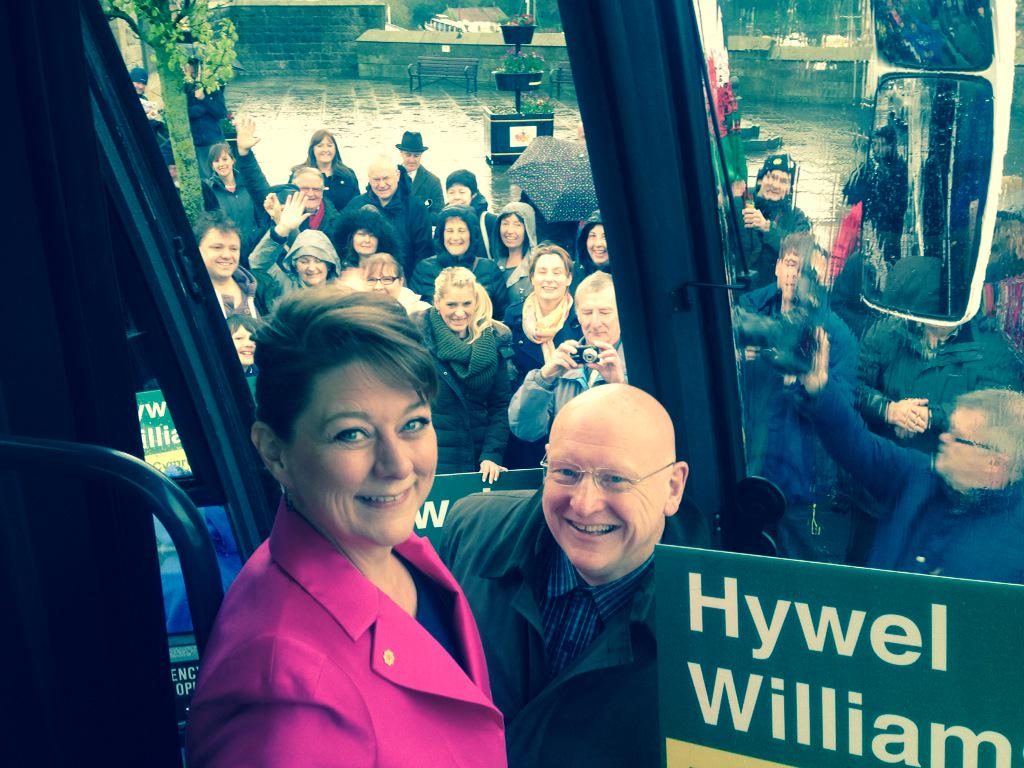
"The Nineteenth century saw a great Springtime of Nations as the revolutions of 1848 saw new countries created the length and breadth of Europe. In our world today we are now seeing our own Spring Awakening with people and cultures that have long been dormant and subdued asserting their right to exist, their right to dream." Adam Price MP
In January 2015, Oxfam, a large charity organization
seeking to eliminate poverty, published a report stating that 1% of the
global population will own more wealth than the rest of the 99%
combined by 2016. This report drew attention to the World Economic Forum
held in Switzerland, where the wealthy elite and politicians addressed
the issue of the widening wealth gap.
A British exit from the European Union could cost the UK billions of
pounds, a report published by two German institutes predicts. The study by Bertelsmann
Stiftung and Ifo Institute calculates if the UK leaves the EU the
country could lose 14 percent of its GDP – equivalent to £215
billion.
Germany and other EU member states would also lose out
financially, although not as much as Britain.
Even if Britain was successful in negotiating a trade agreement
with the EU, the studies found the cost of a ‘Brexit’ would
outweigh the benefits.
The report analyzed three scenarios and looked at the effect an
EU exit would have on Britain in 2030, the year it believes
negative effects will begin to materialize.
In the report’s most positive case, Britain would negotiate a
trade deal with the EU similar to Switzerland’s.
Under such a deal, the UK’s GDP per head would be £157 lower than
if Britain stayed in the EU.
In its most negative scenario, Britain would lose all trade
privileges arising from EU membership and its free trade
agreements.
Losses could run up to £3,471 per head in such a case, which
factors in trade isolation and the dent to innovation in the UK
and London’s position as a financial center.
“A Brexit is a losing game for everyone in Europe from an
economic perspective alone – particularly for the UK,” said
Aart De Geus, chairman and chief executive of the Bertelsmann
Stiftung.
“But aside from the economic consequences, it would be an
especially bitter setback for European integration as well as
Europe’s role in the world. Setting the course for a Brexit in
the House of Commons elections would weaken the EU.”
Europe’s economic powerhouse Germany would also suffer in the
event of a British exit.
The report calculates Germany could see GDP per capita losses
ranging from €30 (£21) to €700 (£500).
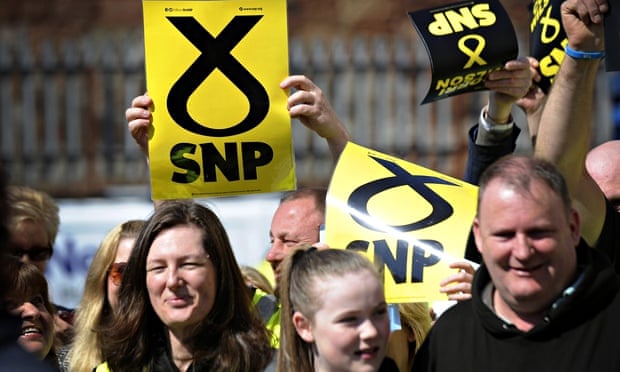
Yes, we know why Nicola Sturgeon is "evading" talk of another Scottish referendum on independence. If she were to admit it she would face the possibility of losing potential votes for the SNP from those who voted No in the referendum, yet who wish to secure a big Scottish representation in parliament in order to advance devolution of powers to Scotland.
A new poll out today points to a truth not many in Westminster are
prepared to admit right now: this year's election is only going to pave
the way for another referendum in the future.
The University of Edinburgh survey found 69% of people believe Scotland
will eventually leave the UK. That's only marginally higher than the
59% who live in England who think the same thing.
"We shouldn't mistake this as support for independence itself," Dr Jan
Eichhorn of the University of Edinburgh tells Politics.co.uk.
"What it means is people in Scotland and every other part of the UK are
not thinking the issue is going away. Some of those people might want
it to go away, but they do think that this issue matters."
His analysis makes sense. The referendum dominated last year and has
triggered a constitutional upheaval which goes well beyond who runs
Holyrood. It has created a wave of momentum which a majority of people
now accept is not going to be halted easily.
The nationalists sensed this before the rest of us did. That was why,
in George Square in Glasgow on referendum night, they were so euphoric.
They knew they had started something which would not simply fade away
and be forgotten about.
Back then their predictions that the Scots would vote for the SNP in
Westminster seemed implausible. Now the expectation is that they could
win as many as 56 of Scotland's 59 seats. That possibility will skew the
2015 election result and make the SNP key players in deciding who
becomes our next prime minister. It's a fascinating prospect and not at
all surprising that we want to examine its implications. But it
distracts us from the bigger picture - that the independence issue
remains as significant as ever.
What flooding Westminster with MPs will do is help propagate the
nationalists' permanent presence on the scene. They are adopting one of
the most tried and tested strategies of war: the envelopment of the
enemy. Cutting off escape routes, shutting down your opponent's
flexibility, triggering a psychological collapse long before the actual
practical options for resistance are exhausted. What the SNP is doing to
the rest of Britain is imposing an unrelenting pressure which creates
its own conclusion.
But it is a steady incremental process, not a quick one. After the
referendum the SNP's initial strategy was to complain about broken
promises. That ultimately led to Sturgeon raising the possibility of a
second referendum if Britain is set to leave the EU. But the University
of Edinburgh's polling has found only 45% of Scots back her on that and
the numbers are even lower elsewhere in the UK.
So instead the nationalists should look to a longer-term goal of
achieving independence in the next few decades, not the next few years.
They should be encouraged because today's research also finds that the
Scottish independence really has motivated political views north of the
border. The 85% turnout figure in the independence referendum itself
wasn't ever going to be repeated in a Westminster election, but Eichhorn
says people in Scotland nevertheless do now have a higher likelihood of
voting in a normal election because of it. Around three-quarters north
of the border say they are certain to vote, compared to around 60%
elsewhere. And many of them want to talk about how Britain is governed.
"Some of that political engagement is moving beyond just the simple
proposition that people engaged with the referendum because that was an
easy issue," Eichhorn adds. "We see something lasting here."
So, it seems, do British voters. They understand that this increased
engagement is a direct response to Scottish nationalism. Those seeking
independence have mobilised the debate and may sooner or later win it.
Today's speech from Sturgeon fits that long-term plan. Dominating the
attention of the Westminster enemy is the first step towards a
successful psychological envelopment. By making themselves impossible to
ignore, with choices narrowing and alternative futures fading away, the
SNP's strategy might be closer to fulfilment than any of us think.
‘The Tories claim the English would be held to ransom under a Miliband
government dependent on SNP support.’ Photograph: Andy
Buchanan/AFP/Getty Images
So now we know the last Tory trick in their book. They’ve tried all
the standard pre-election routines. We’ve had promises of tax cuts,
naturally. They’ve offered a discounted right to buy on housing association homes
they don’t own. The party of austerity has sprayed around spending
pledges, while ridiculing Labour as incompetent spendthrifts. A cabal of
City-funded multimillionaires has tried to paint them as the “party of
working people”. They’ve claimed to be presiding over a great economic
revival.
But the numbers won’t budge. They dismissed Ed Miliband as hopeless, but his ratings are climbing.
So now they’ve fallen back on a brazen attempt to inflame English
nationalism and turn Britain’s peoples against one another. Cheerled by a
Conservative press largely owned by tax-dodging overseas plutocrats,
the Tories claim the English would be held to ransom under a Miliband
government dependent on SNP support. The Scots, who were begged to stay
in the union during last year’s referendum, are now portrayed as some
kind of foreign menace.
The former prime minister John Major, who was himself held to ransom by Ulster Unionists and Eurosceptic MPs, has claimed an SNP-backed Labour government would face “blackmail”. The SNP leader, Nicola Sturgeon, is denounced as “the most dangerous woman in Britain”. There’s even talk of an SNP “coup” and “fascist intimidation”.
This is all fantastical and anti-democratic nonsense. Some of it is no doubt rubbing off south of the border, where the Tory tactic is specifically aimed at winning back English nationalist Ukip voters.
But those who claim to treasure a united Britain can’t have it both
ways. Either Scotland is part of the union or it isn’t. If it is,
whoever Scottish voters elect has the same right to play a part in
Westminster politics as any other party.
No wonder the Tories themselves have fallen out
over the issue, with genuine unionists such as the former Scottish
secretary Lord Forsyth accusing the prime minister of playing a
dangerous game. If the game is successful, and the Tories are returned
to Downing Street, that will provide by far the most fertile ground for a
new referendum on Scottish independence to be held and won.
The reality is that, on current polling, either Miliband will become
prime minister with SNP support – or there will be five more years of
Cameron. That’s a bitter pill for Labour in Scotland to swallow, and if
the party can pull back a few seats from the expected SNP landslide, it
will strengthen Miliband’s hand. But the rise of the SNP, which has
determinedly positioned itself to Labour’s left, is the product of 20
years of New Labour politics and an anti-establishment tide across
Europe that has swelled since the 2008 crash. The Sun’s claim that the
SNP is “hard left” is crazed. Sturgeon has understandably been taken to
task over privatisations and spending squeezes in Scotland.
But the SNP ship has sailed. And the idea that nationalist support
would make a minority Labour government “illegitimate” – let alone that
this would be the first time such a thing has happened, as Cameron claimed at the weekend
– is ridiculous. Minority and coalition governments dominated the first
half of 20th-century Britain. Governments dependent on Irish
nationalist support were common in the years leading up to the first
world war. And Labour governments have regularly relied on the Irish
nationalist SDLP, even though the party wants to “break up the UK”.
You’d never know from the anti-Scottish fearmongers that Sturgeon is now the most popular party leader in Britain
– when English and Welsh voters were exposed to her in the leadership
debates, many liked what they heard. Nor would the SNP’s negotiating
hand in a hung parliament be as strong as claimed, given the party’s
commitment to vote down a Tory administration in any circumstances. And
Cameron’s Conservatives would themselves very probably have to rely on
Ukip and Northern Irish DUP votes, as well as his own right wing, if
their scaremongering were to take them over the line on 7 May.
But all this is a diversion from the fundamental choice at the
election. That is between a Cameron-led government, which has presided
over the deepest cuts in the living standards of the poorest for over a
century while slashing taxes for the rich, and which now wants, in his own words, to make small-state austerity “permanent”.
The only alternative is a government led by Miliband, committed to
ditching the bedroom tax, clamping down on zero-hours contracts and
non-dom tax status, abolishing the House of Lords, introducing mansion
and bankers’ bonus taxes, and raising the top rate to 50%.
For all Miliband’s compromises over austerity, the distance between
the main parties is wider than is often understood. That’s partly
Labour’s own doing. As the Institute of Fiscal Studies points out, there
is little difference between the SNP’s “anti-austerity” spending
pledges and Labour’s “triple lock budget responsibility” plans, which in
fact would allow Miliband to avoid almost all cuts.
But Labour leaders give the opposite impression, to appease the City
and potential swing voters fed years of economic mumbo-jumbo by
politicians and the media. The danger is, that message alienates Green voters and others Labour needs to win back
to be able to form a government – just as Cameron is fighting to
deflate Ukip support. On the doorstep in Nick Clegg’s Sheffield Hallam
constituency on Friday, no one raised the Caledonian menace with me. But
police employees who a generation ago would have been solid Tory voters
were enthusiastically backing the Labour challenger.
Which underlines Cameron’s problem: however much he trumpets
recovery, the reality of cuts, job insecurity and years of falling
living standards have taken their toll. Against that background, the
prospect of a minority government dependent on other parties committed
to change is hardly so terrifying, let alone illegitimate.
There are plenty of downsides, including the risk of spatchcocked
policies and endless haggling. But multiparty alliances, informal or
otherwise, also offer the prospect of opening up politics to pressure
from those who have been locked out of the system – inside and outside
parliament. In any case, some such arrangement now looks almost certain.
The only question is which party and prime minister will be at the
centre of it.
We have had Labour scaremongering and Tory scaremongering, where the two major parties, in league with the right wing media, the banks and the big corporations, united in attempting to ensure the defeat of the Yes vote in the Scottish referendum. Now we are witnessing scaremongering tactics from the Tories, themselves running scared of the prospect of a Labour government supported by the SNP. Recent comments by John Major, Sarah Vine and Michael Fallon are aimed at instilling fear into the minds of the British public, yet are being combated by the directness and honesty of the smaller parties, and particularly by that feisty Scotswoman, Nicola Sturgeon.
General Election 2015: Britain would become a
'communist dictatorship' under Ed Miliband and Nicola Sturgeon, claims
wife of Michael Gove.